
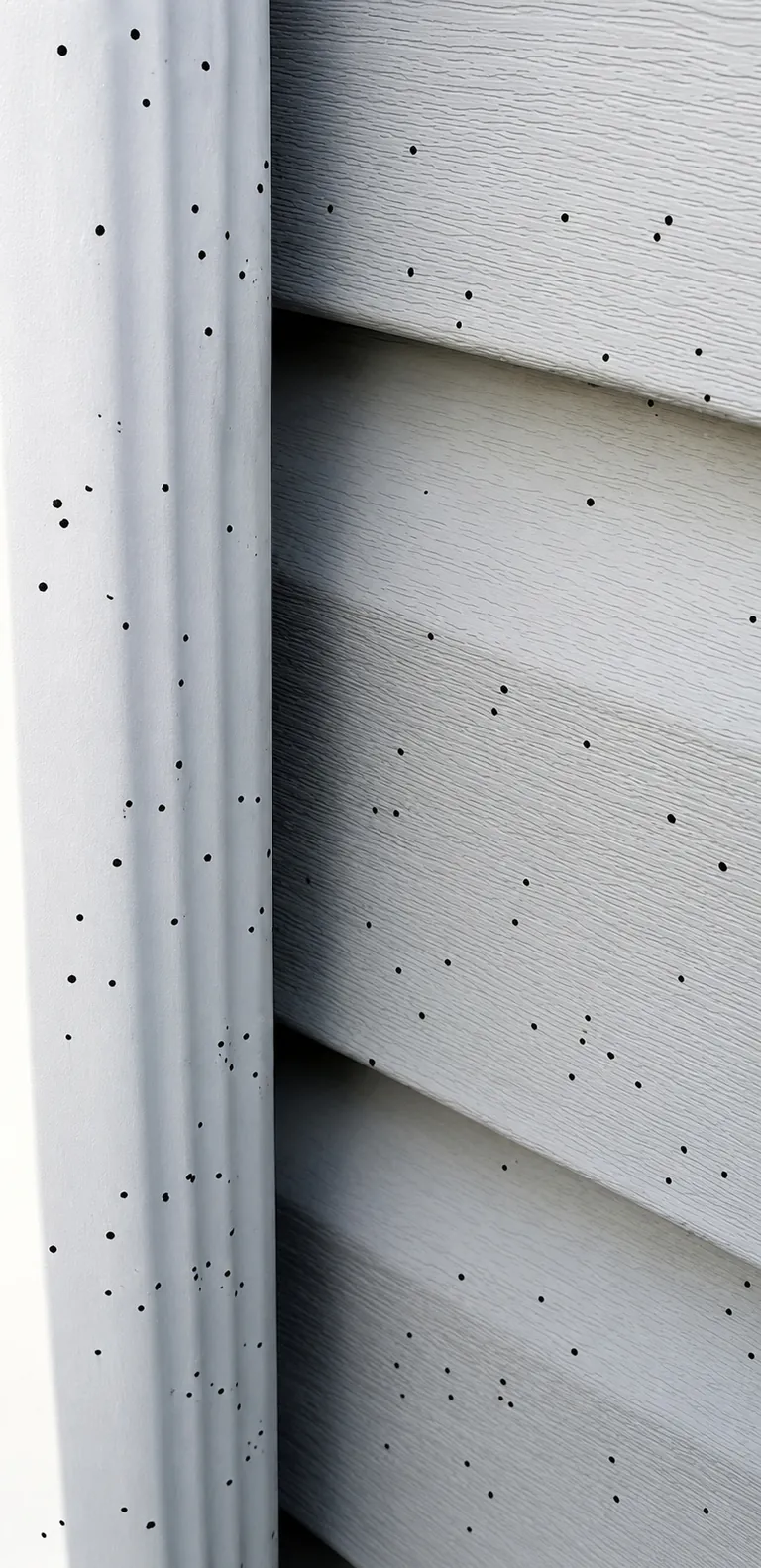
What is shotgun fungus?
Shotgun or artillery fungus is a wood-decay fungus commonly associated with moist wood-chip mulch. Its tiny fruiting bodies release sticky spore packets toward bright or reflective surfaces, which is why the spots are often most noticeable on light-coloured siding and vehicles.
The spots look like small black dots, and people often mistake them for spider or bug poop. They are unsightly, but they do not feed on vinyl or painted siding.
If the affected wall or vehicle is beside a damp wood-mulch bed, that mulch may be the source. The fungus grows in decomposing organic material rather than on the siding itself.
Why are the spots so difficult to remove?
The spore packets have an extremely adhesive coating. Once they have dried onto a surface, ordinary washing and even high pressure may not remove them. Scraping or aggressive cleaning can leave stains or damage the finish underneath.
Fresh spots may respond differently from old, hardened spots, but no cleaning result should be promised without assessing the surface first.
Will pressure washing solve the problem?
A professional house wash can remove the surrounding dirt and organic buildup, but established artillery-fungus spots may remain. Using more pressure is not automatically the answer and may harm siding, paint, or vehicle finishes.
Bare Bones can assess the exterior and explain what routine washing may improve. Because the spots can adhere so strongly, complete removal cannot be guaranteed.
How can future spotting be reduced?
Addressing the source is generally more effective than repeatedly cleaning the landing surface. Removing or replacing affected wood mulch, disturbing it so it dries more readily, or choosing a less favourable mulch material may reduce future spores.
For more detailed horticultural information, see the Penn State Extension guide to artillery fungus.