What is siding oxidation?
Vinyl siding is durable and relatively easy to maintain, but years of exposure to oxygen, sunlight, moisture, pollutants, and changing temperatures can alter its surface. The result may appear as a white or chalky film, fading, or a loss of the siding's original lustre.
That film is oxidation. It is a natural weathering process in the vinyl material, not simply a layer of dirt sitting on top.
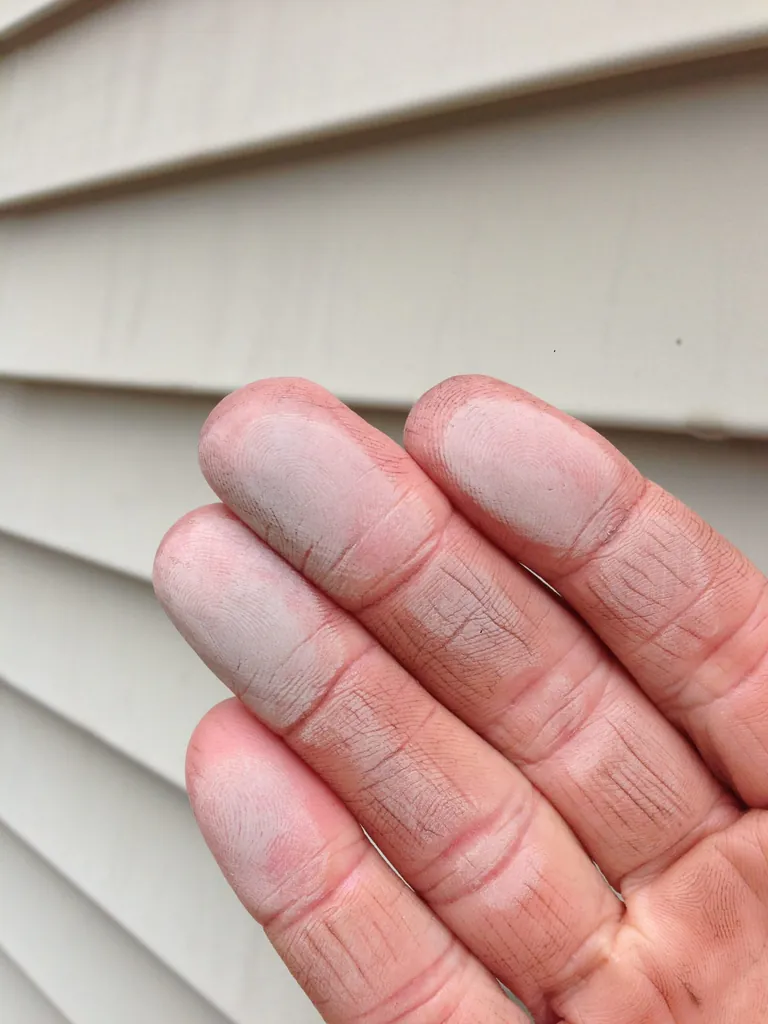
A chalky residue that transfers to your hand when you rub the siding may indicate oxidation. A proper assessment is still important because dirt, organic growth, and oxidation can appear together.
What contributes to oxidation?
Oxidation develops gradually as the siding is exposed to the elements. Strong sunlight, repeated moisture, airborne pollutants, and seasonal temperature changes can all influence how quickly the finish weathers.
Because exposure varies around a house, one wall may look more faded or chalky than another.
Can house washing remove it?
A professional house wash can remove dirt, debris, organic growth, and pollutants that make siding look dull. Routine cleaning may also help reduce the buildup that contributes to weathering over time.
However, washing does not reverse advanced oxidation in the vinyl itself. Restoring heavily oxidized siding may require a specialist restoration service.
Bare Bones provides professional house washing, but does not offer advanced oxidation removal or siding-restoration services. Peter will be clear about what cleaning can realistically improve.
Why the distinction matters
If oxidation is mistaken for dirt, aggressive pressure may be used in an attempt to force the film away. That can leave uneven marks or damage the surface without solving the underlying weathering.
An experienced pressure washer starts by identifying what is on the siding and selecting a cleaning method that respects the material.